

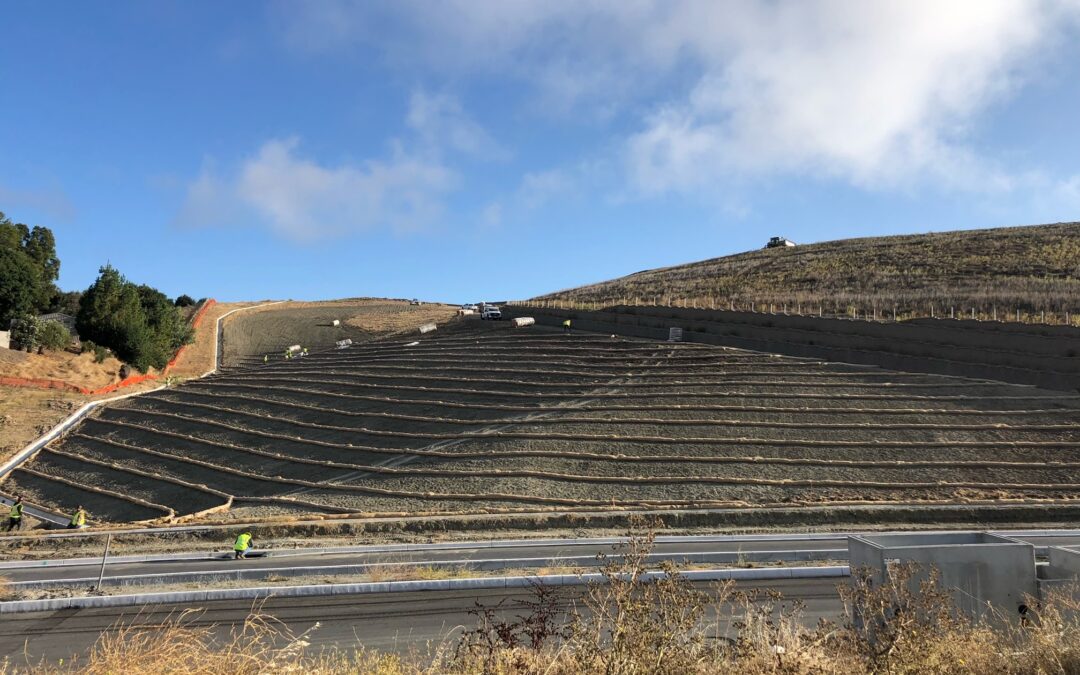
Summer is when California construction sites go out of compliance quietly. Active grading slows, exposed soil sits unattended, and the compliance clock keeps running whether or not rain is in the forecast. If you manage a Northern California site, soil stabilization California construction requirements do not pause for the dry season — and that is exactly the gap SWIMS has watched sites get cited for over the past 26 years.
The misconception is understandable. No storm event, no runoff, no problem, right? Not under California’s Construction General Permit. Soil stabilization California construction rules are built around how long an area sits disturbed, not whether the sky is clear. This is the practical walkthrough every project manager needs before October, when the rainy season returns and inspectors start looking closely.
What CGP 2022 Actually Requires When Grading Stops
California’s Construction General Permit (the current version referred to throughout this post as CGP 2022) governs storm water discharges from construction sites that disturb one or more acres. It is administered by the California State Water Resources Control Board, and it does not take the summer off.
The provision that catches most sites is straightforward. CGP 2022 Section VII.B requires temporary or permanent stabilization within 14 calendar days of the last active grading or soil-disturbing activity in any area of the site. Note the language carefully: any area of the site. A site can be fully active overall while a back lot, a stockpile zone, or a finished pad has gone quiet. If that specific area has not seen soil-disturbing work in 14 days, it needs stabilization, independent of the weather.
That is the trap. A project humming along through July still has corners where the 14-day clock has run out. Nobody is tracking those corners because nothing dramatic is happening there. Then a QSP inspection or a regional board visit finds bare, unstabilized soil that has been sitting for three weeks, and the citation writes itself.
What “Stabilized” Means Under the Construction General Permit
Here is where good intentions fall short. “Stabilized” has a specific meaning under the permit, and installing a control is only part of it. Under CGP 2022, stabilization must be installed, maintained, documented, and inspected — installed but undocumented stabilization does not satisfy the permit. A perfectly good erosion control blanket with no paper trail behind it is, for compliance purposes, not there.
The permit accepts a range of methods. Acceptable stabilization includes:
- Hydraulic mulch: sprayed mulch that bonds to the soil surface
- Erosion control blankets and mats: rolled products anchored over graded slopes
- Straw mulch: properly crimped into the soil or held with netting so it does not blow away
- Seeding: temporary or permanent vegetative cover
- Soil binders: tackifiers and polymer applications
- Gravel or rock cover: particularly on slopes and high-traffic zones
The method matters less than the documentation and upkeep behind it. Straw that has scattered, a blanket that has lifted at the edges, or hydraulic mulch that has worn thin all read as failures on inspection, even though something was technically “installed.” Stabilization is a maintained condition, not a one-time task.
What Are the Most Common Dry-Season Stabilization Failures on California Sites?
After more than two decades on Northern California construction sites, the same handful of failures show up again and again once grading slows for the summer:
- Untracked 14-day windows. The site is active, so nobody notices that a specific graded area has gone two weeks without soil-disturbing work. The clock ran out and no one was watching it.
- Stockpiles left bare. Soil and aggregate stockpiles are disturbed areas too. They sit untouched for weeks in the dry season and rarely get covered until rain is forecast. By then it is already too late under the 14-day rule.
- Degraded stabilization treated as permanent. Straw blows off, blankets lift, soil binders break down under UV. What was compliant in May is failing by August because no one is maintaining it.
- Missing documentation. The erosion control is physically in place, but the SWPPP records do not show when it went in, who inspected it, or its current condition.
- Tracking controls ignored in summer. Tread cleaning plates and stabilized construction entrances are required at every vehicle exit regardless of season. Crews assume dry conditions mean less tracking and let these controls lapse.
None of these are exotic. They are the ordinary consequences of treating the dry season as a compliance holiday. BMP maintenance is the difference between a site that looks quiet and a site that is actually compliant.
How to Stay Compliant Through the Dry Season: A Practical Checklist
Staying ahead of CGP 2022 through the summer is mostly about discipline, not heroics. Effective soil stabilization on a California construction site comes down to tracking the clock and keeping records current. Here is the practical sequence:
Track every area’s last-disturbed date. Map the site by area and log when soil-disturbing work last happened in each. That single record tells you which zones are approaching the 14-day threshold.
- Stabilize before day 14, not on a rain forecast. The trigger is inactivity, not precipitation. Schedule stabilization off the last-disturbed date.
- Cover stockpiles and finished pads. Any area not seeing active work qualifies. Use blankets, mulch, or soil binders matched to the surface.
- Maintain tracking controls year-round. Keep stabilized entrances and tread cleaning plates functional at every vehicle exit, summer included.
- Keep the QSP inspection cadence. CGP 2022 requires QSP inspections at minimum weekly during the rainy season and at least every two weeks during the non-rainy season for active sites. The dry season does not eliminate inspections. It just changes the interval.
- Document as you go. Photograph each stabilized area, record install and inspection dates, and file it in the SWPPP. If it is not written down, it does not count.
SWIMS provides soil stabilization, erosion control blanket installation, and SWPPP documentation for Northern California construction projects. The whole checklist is handled by one crew that knows your site.
Why Stabilization Documentation Is as Important as the BMP Itself
It is worth repeating because it is the failure point that surprises experienced PMs: under CGP 2022, the documentation is the compliance. A regional board inspector cannot give you credit for stabilization they cannot verify in your records. On a California construction site, soil stabilization that is not documented is treated as no stabilization at all. Installed-but-undocumented work does not satisfy the permit, full stop.
Thorough records do more than satisfy an inspector. They protect you. When a question comes up about whether an area was stabilized in time, a dated photo and an inspection log answer it immediately: no scrambling, no relying on memory, no exposure. For PMs managing several active areas across a large site, that documented trail through QSP and QSD services is what turns a tense inspection into a routine one.
This is also where proactive communication earns its keep. A crew that flags a degrading blanket or an approaching 14-day window before it becomes a violation is doing the part of the job that never shows up in a line item, and the part that keeps your project moving.
SWIMS Handles Dry-Season Stabilization as Part of Your BMP Program
You do not need a separate vendor and a separate mobilization to stay stabilized through the summer. SWIMS folds dry-season soil stabilization into the same BMP maintenance program already running on your Northern California construction site: one crew, the same documentation trail, no extra mobilization. The team tracking your storm water inspections is the team installing blankets, covering stockpiles, and updating your SWPPP records.
One compliance gap on an active site can halt your project and damage a reputation you have spent years building. It almost always surfaces at the worst possible moment, during a surprise inspection or the first storm after a quiet summer. SWIMS has handled California construction site storm water compliance for 26 years, showing up on time with the right people and the right equipment.
Frequently Asked Questions
Does the CGP 2022 14-day stabilization rule apply in the dry season?
Yes. CGP 2022 Section VII.B requires temporary or permanent stabilization within 14 calendar days of the last active grading or soil-disturbing activity in any area of the site, regardless of whether rain is expected. The trigger is inactivity, not precipitation, so the rule applies year-round, including the summer dry season on Northern California sites.
What counts as acceptable soil stabilization under the Construction General Permit?
Acceptable methods include hydraulic mulch, erosion control blankets and mats, straw mulch (properly crimped or netted), temporary or permanent seeding, soil binders, and gravel or rock cover on slopes. Whichever method you use, it must be installed, maintained, documented in your SWPPP records, and inspected. Installed but undocumented stabilization does not satisfy the permit.
How often does a QSP need to inspect an active site during the dry season?
Under CGP 2022, a QSP must inspect active sites at minimum weekly during the rainy season and at least every two weeks during the non-rainy season. The dry season reduces the frequency but never eliminates the requirement. Tracking controls such as tread cleaning plates and stabilized construction entrances remain required at every vehicle exit regardless of season.
Do not let a quiet summer turn into a compliance citation. Ask about SWIMS stabilization services for your Northern California construction site. Call (866) 967-9467 or get a free assessment at swimsclean.com.