

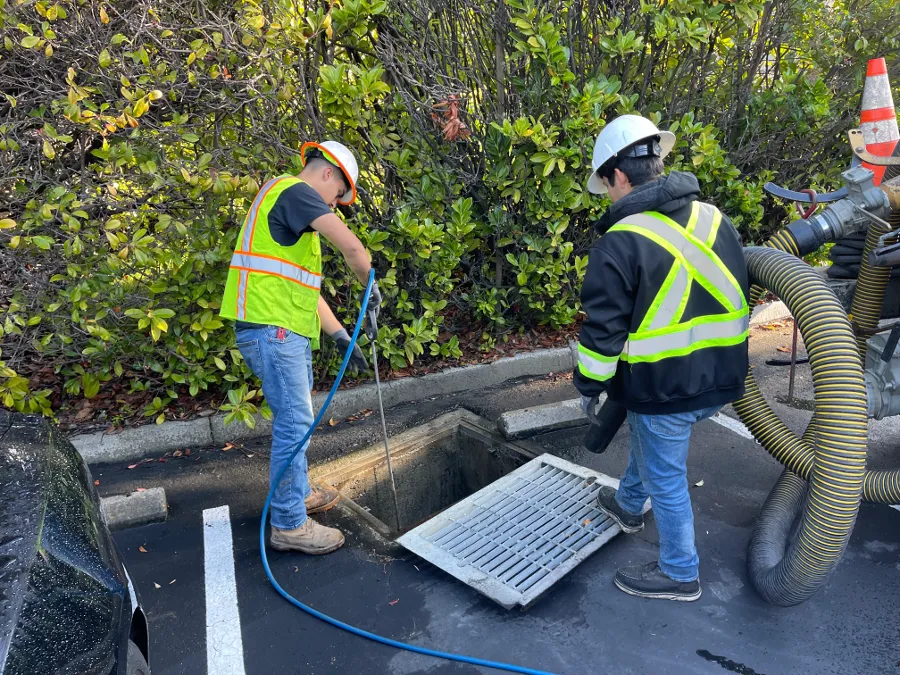
Most storm drain service companies clean the drain. The good ones also protect you from regulatory risk.
That distinction matters more than many property managers realize. A truck can vacuum out sediment and still leave you exposed if there is no record of what was found, how much was removed, or what condition the structure was in. When agencies review files or a board asks for proof of maintenance, the real question is not “Was it cleaned?” It is “Can you show it?”
This article walks through what a strong storm drain service should be documenting, why it matters to you, and how to tell if your current vendor is operating at that level.
Storm Drain Service and the Compliance Gap
For many HOAs and commercial properties, storm drain service gets scheduled like landscaping. It is routine. It happens quarterly or twice a year. An invoice arrives. The line item reads “catch basin cleaning.” Everyone assumes the job is done.
But regulators do not evaluate invoices. They look at records. In California, stormwater programs overseen by the State Water Resources Control Board require properties to maintain drainage systems in a way that protects receiving waters. Even construction projects are subject to inspection standards under the Construction General Permit, which outlines documentation expectations that often influence how agencies view ongoing maintenance practices.
A basic cleaning log does not tell the full story. Without documentation, there is no proof that sediment levels were excessive, that debris was obstructing flow, or that structural issues were identified. That is where the compliance gap lives, and that is where a stronger storm drain service earns its value.
The 5 Things Your Storm Drain Service Should Be Documenting
If you are evaluating your current vendor, this is the checklist. Not for cleaning quality alone, but for documentation quality.
1. Photo Reports That Show Real Conditions
A proper storm drain service should include before and after photos of each catch basin or drain structure serviced. Not a generic photo of a truck on site. Not a wide shot of a parking lot. Close up images that show sediment depth, debris, and final condition.
These photos matter when you are reporting to an HOA board. They matter when a resident asks why maintenance costs increased. They matter if a city inspector asks for evidence that the system is being maintained. A clear image tells a story that a line item cannot.
We often hear from managers who struggle to explain maintenance work to non technical board members. Joanne Young of Community Management put it plainly. She shared that what she values most is the thorough reports that make it easier to communicate with HOA board members. That level of detail builds trust.
2. Sediment Measurement and Removal Volumes
Cleaning is not the same as measuring. A thorough storm drain service documents how much sediment was present and how much was removed. Was the basin twenty five percent full? Fifty percent? At or near capacity?
Those numbers show trends over time. If one basin fills faster than others, that signals upstream issues such as erosion or heavy debris loads. Without measurement, you lose the ability to manage proactively.
When sediment levels approach thresholds set by local programs, documentation becomes critical. Agencies often look for evidence that basins are cleaned before they reach a certain percentage of capacity. A vendor that measures and records sediment depth is giving you more than maintenance. They are giving you data.
3. Schedule 1 Compliance Notes
Many property managers are not stormwater specialists, and they should not have to be. Still, your storm drain service should understand how local permits and municipal codes apply to your site.
Schedule 1 compliance notes, or similar program specific references, show that the vendor is aware of regulatory expectations. These notes might reference inspection frequency, structural condition requirements, or debris disposal standards. They connect field work to compliance obligations.
If your vendor cannot explain how their documentation supports municipal stormwater permit requirements, that is a red flag. Cleaning without context does not protect the property.
For properties that also require broader oversight, pairing drain maintenance with periodic stormwater inspection services can strengthen overall documentation and keep everything aligned.
4. Catch Basin Condition Assessment
Every storm drain service should include a visual assessment of the structure itself. Is the frame cracked? Is the grate damaged? Is there evidence of corrosion or joint separation?
A basin that is structurally compromised can allow sediment to bypass controls or create safety hazards. If the only documentation you receive is a note that the basin was cleaned, you may miss developing issues.
A short condition summary, supported by photos, allows you to plan repairs before they escalate. It also provides documentation that you are monitoring infrastructure, not ignoring it.
5. Maintenance History Tracking
One visit does not tell the full story. A strong storm drain service tracks maintenance history over time. When was each basin last cleaned? How often does it require service? Are there recurring issues?
This historical view becomes powerful during budget planning. It also becomes critical during inspections. If an agency reviews your records and sees consistent, documented maintenance, that shapes the conversation.
Maintenance history also ties into related services. For example, regular street sweeping reduces debris entering catch basins, which in turn extends cleaning intervals. When documentation connects these efforts, you demonstrate an integrated approach to stormwater management.
Why Thorough Reporting Matters to HOA Boards
Many property managers answer to boards made up of volunteers. These board members are responsible for budgets and liability, but they may not have a technical background. When they ask for justification of maintenance costs, a vague invoice is not persuasive.
A detailed storm drain service report helps you translate technical work into understandable terms. Photos show the problem. Sediment measurements show why cleaning was necessary. Compliance notes show that maintenance supports regulatory obligations.
This reduces friction. Instead of debating whether a cleaning was needed, the conversation shifts to planning and prioritization. The board sees that maintenance is documented and defensible.
Joanne Young’s experience reflects this dynamic.
“We have used SWIMS for maintaining storm drains for many years. They communicate proactively with us about their schedule and issues that they have identified at our properties. I appreciate the thorough reports they provide that make the job of communicating with HOA board members easy.” -Joanne Young, Community Management
That ease is not accidental; it comes from structured documentation.
The Regulatory Reality Behind Storm Drain Service
For existing properties, stormwater oversight typically falls under a city or county’s MS4 permit. These municipal programs require ongoing operations and maintenance of stormwater infrastructure, including catch basins and private storm drain systems.
That means regulators are not only looking at new construction sites. They are also evaluating how properties manage runoff over time. When cities conduct inspections under their MS4 programs, they may request maintenance records for private drainage systems to confirm that sediment and debris are not entering the public storm system.
In this context, storm drain service is directly tied to compliance. Documentation showing regular cleaning, sediment levels, and condition assessments demonstrates that the property is maintaining its system in line with municipal requirements. Thin or inconsistent records raise questions.
The difference is in whether the property can show that maintenance is happening in a structured, documented way that supports water quality goals under local MS4 regulations.
How to Evaluate Your Current Vendor
You do not need a technical audit to assess your storm drain service. Start with one question.
Ask your vendor for a sample report.
Look at it carefully. Does it include photos of each basin? Are sediment levels recorded? Are there notes on structural condition? Is there a history log showing prior service dates?
If the report is one page with a signature and a total cost, that tells you something. If the report is structured, detailed, and consistent, that tells you something else.
Also consider communication. Do they notify you of scheduling and site issues in advance? Do they flag developing problems before they become emergencies? Proactive communication is often the difference between a vendor and a partner.
Storm Drain Service as Risk Management
At its core, storm drain service is about protecting water quality. For property managers, it is also about protecting the property itself. Flooding risks increase when basins are clogged. Pavement damage accelerates when water cannot drain properly. Regulatory exposure grows when maintenance cannot be proven.
When documentation is strong, you are in control of the narrative. You can show that basins were inspected, cleaned, and monitored. You can demonstrate that sediment levels were addressed before capacity was compromised. You can present a maintenance history that reflects diligence.
That level of reporting supports budgets, board communication, and regulatory conversations. It turns routine maintenance into documented stewardship.
Ask the Question That Matters
Here is the simple test.
Ask your vendor: “Can I see a sample report?”
If they hesitate, that is your answer.
At SWIMS, we believe storm drain service should do more than remove debris. It should provide the documentation you need to communicate with boards, demonstrate compliance, and manage risk with confidence. If you would like to see how our reporting is structured, we are happy to share a sample and walk through it with you. Contact us today.